International conventions such as SOLAS, the Load Lines Convention, MARPOL and STCW set minimum standards for ship safety, pollution prevention, training and operation.
These instruments are developed and adopted through intergovernmental organisations, principally the International Maritime Organization (IMO). The International Labour Organization (ILO) develops international labour standards, including the Maritime Labour Convention, 2006.
Under Articles 91, 92 and 94 of the United Nations Convention on the Law of the Sea, a ship is registered in a State and generally sails under that State's flag.
The flag State must exercise effective jurisdiction and control over administrative, technical and social matters affecting ships flying its flag.
In the UK, key bodies involved in registration, compliance and safety investigation include:
The MCA implements and enforces UK merchant shipping legislation. It carries out surveys and inspections and may authorise recognised organisations to undertake certain statutory work.
The
Marine Accident Investigation Branch (MAIB) independently investigates marine accidents involving UK interests or occurring within UK waters. Its purpose is to improve safety and prevent recurrence, not to establish blame or liability.
A ship carries statutory certificates and other documents as evidence that it has been surveyed and complies with the applicable requirements. Certification may be carried out by the flag State administration or, where authorised, by a recognised organisation acting on its behalf.
The flag State remains primarily responsible for ensuring that the ship, its equipment and its operation meet the required standards. This is the first line of defence against substandard shipping
Port State control (PSC) is the inspection of a foreign ship in a national port. It provides a second line of defence by checking that the ship and its equipment comply with the applicable international requirements and that the ship is properly manned and operated.
For example, if an MCA surveyor boards a UK-flagged ship in Southampton in their capacity as the flag State administration, this is a flag State inspection. If an MCA surveyor boards a Liberian-flagged ship in Southampton as the UK port State authority, this is a port State control inspection.
An initial PSC inspection normally includes checking that the ship's certificates and other relevant documents are valid.
The port State control officer (PSCO) will also consider whether the condition of the ship and its equipment broadly corresponds with the certificate particulars and whether the master and crew are familiar with essential shipboard procedures.
If the PSCO finds clear grounds to believe that the ship, its equipment or its operation does not meet the required standard, they may carry out a more detailed inspection.
Depending on the seriousness of any deficiencies, the ship may need to correct them before sailing and could be delayed or detained.
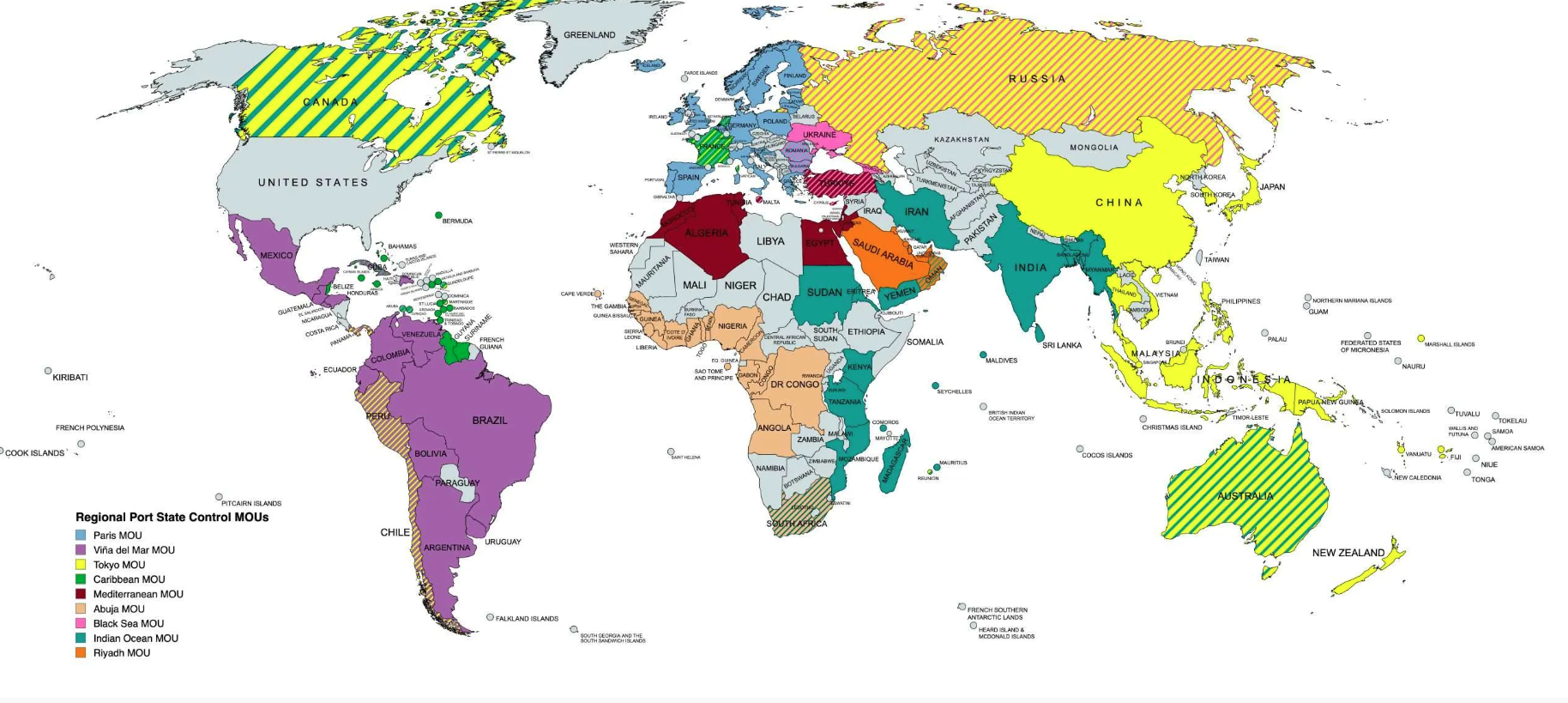
Neighbouring authorities cooperate through regional PSC regimes so that they can share inspection information, coordinate activity and focus attention on higher-risk ships.
IMO identifies nine regional regimes, while the United States Coast Guard maintains a separate PSC regime. Some countries belong to more than one regional regime.
The Paris and Tokyo MoUs periodically carry out joint concentrated inspection campaigns (CICs). These campaigns use an agreed questionnaire to examine a specific area of compliance alongside the normal PSC inspection.
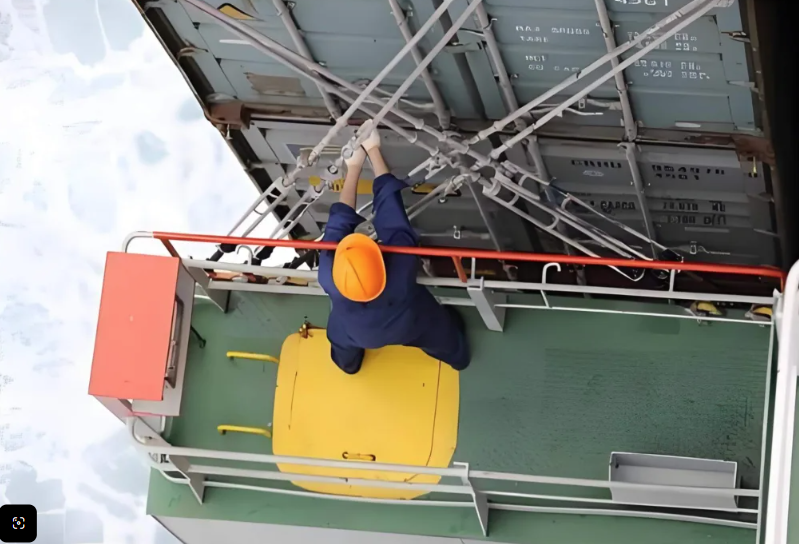
The 2026 campaign will run from 1 September to 30 November and will focus on the securing of cargo units and cargo transport units. Officers and crew should expect questions about the ship's approved arrangements, the condition and use of securing equipment, relevant records and their practical response to changing conditions.
Any deficiencies identified will be recorded by the PSCO. The port State's response may range from recording a deficiency to detaining the ship. The questionnaire also identifies questions for which a 'No' answer may lead to the ship being considered for detention.
The campaign is directly relevant to MCA oral exam preparation because cargo securing is both a regulatory and an operational responsibility.
A strong answer should connect the rule or document to the action taken on board.
It is not enough to name the Cargo Securing Manual: candidates
should be ready to explain where the information is found, how compliance is checked and what they would do if conditions changed.
Use the campaign questionnaire as a prompt and prepare to answer questions such as:
- Which ships are required to carry an approved Cargo Securing Manual?
- Does the Cargo Securing Manual provide clear lashing instructions for every stowage arrangement found on board?
- How would you explain container stack weight, tier weight distribution and the loading limits for the tank top, hatch covers and decks?
- How would you demonstrate that the Cargo Securing Manual is being followed?
- How would you confirm that the cargo plan reflects the verified gross mass of the containers being loaded?
- What is included in a Cargo Safe Access Plan, and when is one required?
- Does the ship carry enough approved portable securing devices of the correct brand and type for the intended cargo?
- How would you confirm that fixed and portable securing devices are compatible, in good condition and maintained under the inspection and maintenance scheme in the Cargo Securing Manual?
- How would you ensure that the cargo stow does not restrict the required view from the bridge?
- What heavy-weather procedures or arrangements are included in the safety management system, and how would you show that they have been followed?